Publication : Palaeogeography, Palaeoclimatology, Palaeoecology

Publication de l’article sur l’origine des vallées tunnel
Does porewater or meltwater control tunnel valley genesis? Case studies from the Hirnantian of Morocco

ravier et al 2015 pal pal pal

Highlights

  • •We compared processes involved in the formation of two Upper Ordovician tunnel valleys.
  • •Models of tunnel valley formation are driven by porewater pressures or meltwater flows.
  • •The distribution of ice streams controls tunnel valley formations and morphologies

Abstract :

Several Ordovician tunnel valleys are exposed in the Moroccan Anti-Atlas Mountains, including the Alnif and the Foum Larjamme tunnel valleys, located 150 km away from each other. Sedimentological and deformational analyses of these two glacial troughs reveal that differing processes lead to their formations.

The Alnif tunnel valley contains numerous deformation structures within sediments both below and above the main glacial erosion contact surface. Ball-structures and clastic dykes occur within preglacial sediments down to 35 m below glacial incisions while overlying glacial sediments contain fluted surfaces, clastic dykes, dewatering structures, folds and radial step normal faults. The characteristics of the Alnif tunnel valley can be explained by a porewater pressure-driven model of formation where the localized increase of basal shear stress and porewater pressure underneath subglacial deforming zones lead to the development of a dense hydrofracture network in the preglacial bed. These processes of hydraulic brecciation promoted subglacial remobilization of the preglacial material and contributed to the formation of the tunnel valley.

The Foum Larjamme tunnel valley displays undisturbed preglacial sediments and few dewatering structures at the base of the glacial sedimentary infill which suggests relatively low porewater pressures within the tunnel valley during formation. This second type of tunnel valley where porewater pressure remained relatively low appears to have been formed by meltwater erosion. The undulating base of the Foum Larjamme tunnel valley implies progressive erosion by a stable subglacial braided network of Nye-channels, or alternatively by channels migrating laterally during episodic minor subglacial outbursts.

These two tunnel valleys highlight the regional variability of processes involved in the formation of tunnel valleys. The distribution of palaeo-ice streams in North Africa illustrate that morphologies and processes involved in the formation of tunnel valleys vary between ice stream and inter-ice stream zones due to variations in meltwater availability, the topography and bed lithological properties.
Publication : Climate of the Past

Premiers résultats des modélisations climatiques sur la glaciation Ordovicienne. En collaboration avec le CEA et l’IPGP

climate past

Abstract. The Ordovician is a particular Period during Earth History highlighted by abundant evidence for continental-size polar ice-sheets. Modelling studies published so far require a sharp CO2 drawdown to initiate this glaciation. They mostly used non-dynamic slab mixed-layer ocean models. Here, we use a general circulation model with coupled components for ocean, atmosphere and sea ice to examine the response of Ordovician climate to changes in CO2 and paleogeography. We conduct experiments for a wide range of CO2 (from 16 to 2 times the preindustrial atmospheric CO2 level (PAL)) and for two continental configurations (at 470 Ma and at 450 Ma) mimicking the Middle and the Late Ordovician conditions. We find that the temperature–CO2 relationship is highly non-linear when ocean dynamics is taken into account. Two climatic modes are simulated as radiative forcing decreases. For high CO2 concentrations (≥ 12 PAL at 470 Ma and ≥ 8 PAL at 450 Ma), a relative hot climate with no sea ice characterises the warm mode. When CO2 is decreased to 8 PAL and 6 PAL at 470 and 450 Ma, a tipping-point is crossed and climate abruptly enters a runaway icehouse leading to a cold mode marked by the extension of the sea ice cover down to the mid-latitudes. At 450 Ma, the transition from the warm to the cold mode is reached for a decrease in atmospheric CO2from 8 to 6 PAL and induces a ~ 9 °C global cooling. We show that the tipping-point is due to the existence of a quasi-oceanic Northern Hemisphere, which in turn induces a minimum in oceanic heat transport located around 40° N. The peculiar shape of the oceanic heat transport in the Northern Hemisphere explains the potential existence of the warm and of the cold climatic modes. This major climatic instability potentially brings a new explanation to the sudden Late Ordovician Hirnantian glacial pulse that does not require any large CO2drawdown.

Pohl, A., Donnadieu, Y., Le Hir, G., Buoncristiani, J.-F., and Vennin, E. 2014. Effect of the Ordovician paleogeography on the (in)stability of the climate, Clim. Past Discuss., 10, 2767-2804, doi:10.5194/cpd-10-2767-2014

L3BG: Ecole de terrain dans le Jura 2014

Novembre 2014 – Ecole de terrain de géologie pour les Licences 3eme année en sciences de Biologie Géologie de Dijon. Au programme sédimentologie, géomorphologie, hydrogéologie et paléontologie dans le Jura.

L3STE 2014 – Ecole de terrain de sédimentologie

Octobre 2014 – Ecole de terrain de sédimentologie pour les Licences 3eme année en sciences de la Terre de Dijon. Au programme sédimentologie de faciès dans différents environnements : fluviatiles, glaciaire, marins entre la Côte d’Or et le Jura.

Publication :

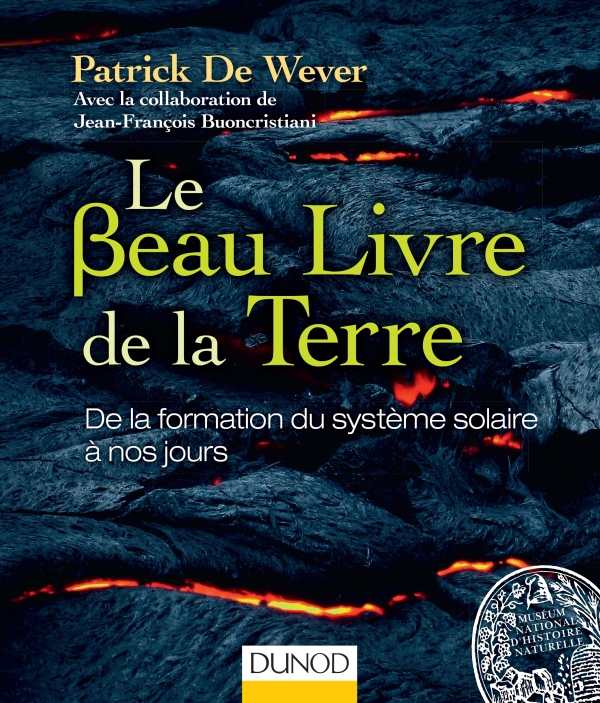
Le beau livre de la terre , de la formation du système solaire à l’anthropocène, une histoire en 200 étapes

Patrick de Wever (Auteur), Jean-François Buoncristiani (Auteur) 

DUNOD Beau livre (broché)

9782100701759-T

Résumé : Des premiers temps géologiques à la naissance de l’être humain, cette histoire de la terre illustrée raconte 200 événements qui jalonnent l’évolution étonnante de notre planète.

En vente en librairie à partir du 05 novembre

Mont blanc : A quelle vitesse s’élève le sommet ?

Chamonix / Mont-Blanc/20 Juin 2014.

Jean-Francois Buoncristiani (Université de Bourgone-CNRS Biogéosciences) et Jean-Louis Mugnier (CNRS IsTERRE Grenoble) ont installés la première mesure GPS sur les rochers qui affleurement sous le sommet du Mont-Blanc. Cette première mesure, effectuée sur les rochers situés une cinquantaine de mètre sous le sommet du Mont-Blanc permettra de connaître la vitesse à laquelle le mont-blanc s’élève. Ce point devra être a nouveau mesuré dans plusieurs années afin de connaître le déplacement du sommet, les mouvements recherché étant de l’ordre du millimètre.

Publication: Sedimentology

Sortie du papier portant sur les critères de différenciation entre le dépôts sous-glaciaires et les dépôts proglaciaires.

article sedimentology

Ravier, E., Buoncristiani, JF., Clerc, S., Guiraud, M., Menzies, J., Portier, E. (2014), Sedimentological and deformational criteria for discriminating subglaciofluvial deposits from subaqueous ice-contact fan deposits: A Pleistocene example (Ireland). Sedimentology. doi: 10.1111/sed.12111


Ecole de Terrain L3 Sciences de la Terre Mai 2014

Ecole de terrain de fin d’année pour les Licences 3eme année en sciences de la Terre de l’Université de Dijon. Au programme : études géomorphologiques, paléontologique, sédimentologiques et tectoniques entre le Jura et Chamonix.

Ecole de Terrain L1 Sciences de la Terre

Ecole de terrain de fin d’année pour les Licences 1ère année en sciences de la Terre de l’Université de Dijon. Au programme : études géomorphologiques, sédimentologiques et tectoniques dans le Jura.

Ecole de Terrain L3 Sciences de la Terre Avril 2014

Ecole de terrain de fin d’année pour les Licences 3eme année en sciences de la Terre de Dijon. Au programme : études environnementales dans le Morvan et sédimentologie de faciès dans le Jura.